Introduction:
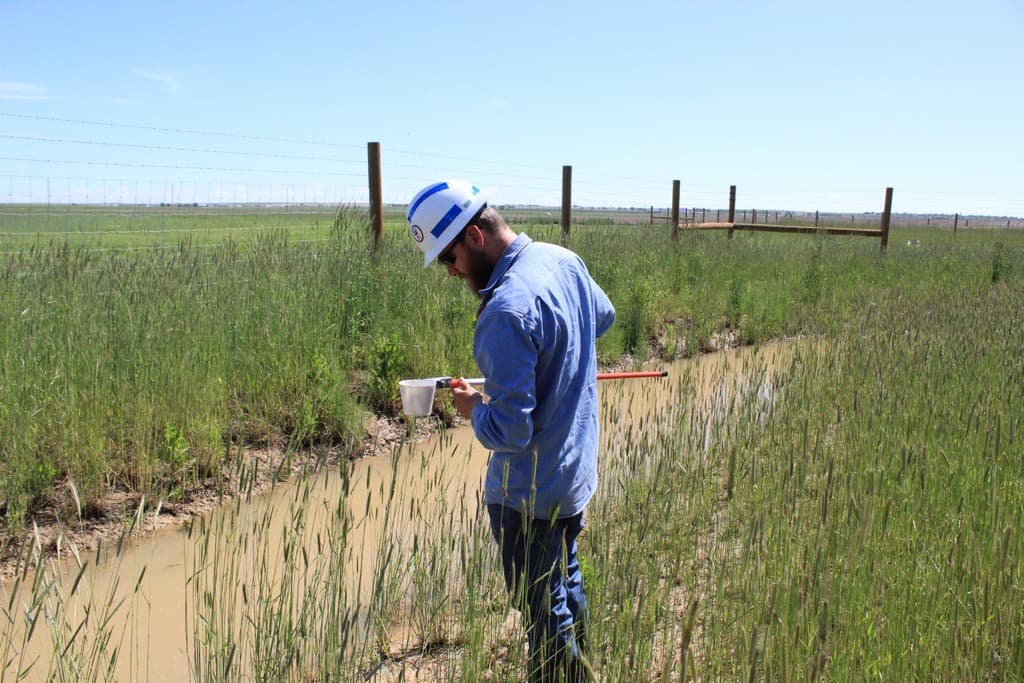
Since 2023, System One Environmental has conducted weekly mosquito surveys at a freshwater pond for an oil and gas client. The pond provides water for drilling operations across Northeastern Colorado. Tasks include monitoring and mitigating potential mosquito breeding associated with West Nile Virus. Surveys were performed each year from May 1 through September 15, focusing on both the pond itself and adjacent stormwater control features.
Challenges:
The survey effort has required consistent weekly monitoring across three consecutive field seasons, ensuring full coverage of both the pond and surrounding stormwater infrastructure. Variable seasonal precipitation influenced habitat suitability, with 2023 presenting atypically wet conditions that maintained water in the stormwater ditch longer than in subsequent years. This variability necessitated careful, repeated assessment of changing site conditions to accurately determine mosquito breeding potential. Additionally, because stormwater control features do not typically retain water long enough to support larval development, distinguishing temporary conducive conditions from typical site behavior required precise field judgment and consistent documentation. Due to client safety procedures, the pond could not be sampled directly on foot by System One Environmental personnel. This required RPG to construct a remote device to access and retrieve the water sample.
Solutions:
Using creative methods, System One Environmental was able to successfully retrieve water samples from the pond while safely staying at the top of the bank. Through systematic weekly surveys, detailed habitat assessments, and consistent coordination with our client, System One Environmental maintained a reliable, repeatable monitoring program for the full duration of the three-year period. Field staff closely tracked water levels, turbidity, and larval presence, ensuring that any changes in breeding potential were promptly identified. Despite fluctuating environmental conditions, the monitoring process remained efficient, consistent, and aligned with project expectations.
Conclusion:
This three-year survey effort demonstrated System One Environmental’s ability to deliver dependable, high-quality biological monitoring over extended timeframes. By applying strong field expertise, adaptability to changing environmental conditions and survey parameters, and proactive communication with project partners, System One Environmental effectively supported public-health-focused mosquito mitigation efforts. Findings from the monitoring period indicate that the pond remains unsuitable for mosquito breeding, and that stormwater control features typically do not retain water long enough to support mosquito development.